
Okay, so check this out—I’ve been messing with a lot of browser wallets over the last few years. Wow! Some were fine for quick trades. Others felt like handing my keys to a stranger. My instinct said “keep it simple,” though that rarely solves the security gaps. Initially I thought all browser wallets were variations on the same theme, but then I dug into the UX and security tradeoffs and things changed. Seriously? Yes. The little details matter, especially when you’re trusting a browser extension with real funds.
Rabby stands out because it tries to combine everyday usability with sensible security defaults. Hmm… here’s the thing. It’s a multi-chain wallet built for people who move assets across networks often. That includes DeFi farmers, NFT collectors, and anyone who tolerates Metamask’s quirks but wants something leaner. I’m biased, but after a few months of using it for swaps, approvals, and chain hopping, Rabby became my go-to extension for day-to-day activity. I’ll explain why and how to use it better, and I’ll point you to the official rabby wallet download for a safe install.
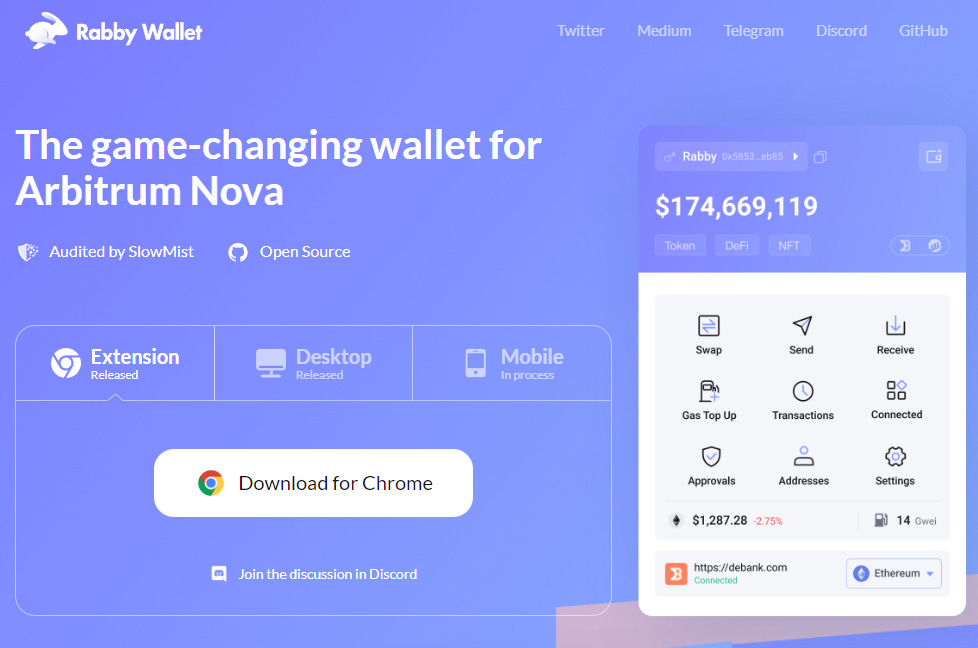
What Rabby gets right (and where it’s still growing)
First, the UX. Short story: it’s fast and focused. Longer story: the interface separates approvals and connections more clearly than many alternatives, which reduces accidental approvals. Wow! That matters because the most common exploits involve users approving malicious contracts. Rabby surfaces which permissions a dApp requests in a way that’s less noisy, so you can actually read it before deciding.
Security features are practical. They include fine-grained approval controls and a built-in transaction simulator that warns you about unusual gas or suspicious calls. Initially I thought this was just marketing, but the simulator flagged a dodgy calldata pattern on a token I was about to add. On one hand, automated warnings can be noisy; though actually, when they catch real problems, you remember them. My instinct said “trust but verify,” and Rabby helps you do that without requiring a PhD in smart contracts.
Multi-chain support feels native. It doesn’t pretend to be everything to everyone, but switching between Ethereum, BSC, Polygon, and testnets is fast. Seriously? Yep. That makes it convenient for anyone who arbitrages, bridges, or tests contracts. The team also keeps the chain list curated, which—again—reduces accidental interactions with obscure RPC endpoints. (Oh, and by the way: if you add custom RPCs, double-check the source.)
Now the limitations. Rabby is not a hardware wallet itself. It integrates with hardware devices in some workflows, but if you need enterprise-grade custody you’ll still pair with a separate solution. I’m not 100% sure about every advanced signing scheme—some edge cases can still be clumsy. Still, for most DeFi users it’s a sensible balance between convenience and safety.
Daily habits that turn Rabby into a safety tool
Use these habits and you’ll reduce your attack surface. Short sentence. 1) Review approvals carefully. 2) Revoke token approvals often. 3) Use separate wallets for big holdings and daily activity. Wow! The key is to treat approvals like permissions on your phone—don’t leave blanket access on forever.
Rabby makes revoking approvals straightforward. The approvals UI shows which contracts have access to your tokens and the allowance amounts. Initially I thought I’d forget to check it, but the interface nudges you. Actually, wait—let me rephrase that: the nudges are useful but not intrusive. On one occasion I revoked a stale allowance that would have let a malicious contract drain a vesting account—no joke. My gut told me that was a close call.
Another habit: simulate transactions before you sign. Rabby’s simulator is not perfect, though it catches common pitfalls like suspicious calldata or abnormal gas usage. On one trade the simulator flagged a token that attempted an approval loop. I paused, dug into the contract source, and avoided a messy loss. That felt good. Seriously, take two extra seconds to simulate.
How Rabby handles approvals differently
Rabby separates connection and permission. That design choice is subtle, but meaningful. Connection means “I can see your address.” Permission means “I can move tokens.” Short. Many wallets blur those lines. Rabby keeps them distinct, and displays the exact allowance being requested. Wow!
There’s also a concept of session management. You can revoke site access without touching allowances. Initially I thought this feature would be niche, but it really helps if you use a lot of ephemeral dApps. On one hand, it prevents lazy permission creep; on the other hand, it requires that you pay attention—entropy isn’t eliminated, it’s managed.
Finally, the transaction visualizer is practical for troubleshooting. It shows the steps a contract will take in a human-friendly way. Long thought here: when you can break down a complex contract call into its component approvals and token moves, you make safer choices, even if you don’t read Solidity. That transparency is what separates usable wallets from dangerous ones.
Installing tips and a safety checklist
When you go to install, use the official source. Download from the developer’s site or the browser’s official store. That is not optional. Really. For a safe install, use the verified extension page and check the publisher name. My rule: if the install instructions have weird redirects or ask for a seed phrase before setup, close the tab.
If you want a quick safe link for retrieval, consider this: rabby wallet download. Seriously, that’s the page I used when I first tested it. After installing, write down your seed offline, move major holdings to a cold wallet, and use Rabby for day-to-day interactions only.
Checklist: back up seed offline, enable hardware signing if you have it, revoke approvals you don’t recognize, simulate high-value transactions, and keep your browser and extension updated. Short phrase.
FAQ
Is Rabby safer than Metamask?
It depends on what you mean by “safer.” Rabby emphasizes clearer approvals and transaction simulation which reduces user error. Metamask has broader integrations and higher ubiquity. If you want clearer permission controls out of the box, Rabby has an edge. On the other hand, wallet choice should match your workflow and threat model.
Can I use Rabby with hardware wallets?
Yes, Rabby can work alongside hardware devices in some contexts. The best practice is to keep large balances in a hardware wallet and use Rabby for active, smaller accounts. That way you combine cold storage safety with the convenience of a browser wallet.
Does Rabby support bridges and cross-chain swaps?
Rabby supports multi-chain interactions and plays well with popular bridges and DEXs. But bridging is inherently risky—double-check routes, token contracts, and bridge reputations before moving funds. My gut says: less is more when it comes to bridging.
To wrap up—well, not a formal wrap-up, but a closing thought—Rabby is not a silver bullet. Wow! It’s a thoughtful browser wallet that nudges users toward safer behaviors without making the experience cumbersome. Initially I expected just another wallet. Instead, I found a tool that prioritizes clearer decisions. I’m biased, sure, but the small design choices add up.
Use Rabby for everyday interactions, pair it with a hardware wallet for big holdings, and don’t skip the basic hygiene: backups, revokes, and simulation. Hmm… I still worry about social engineering and phishing, and nothing fixes that besides a cautious mind. That part bugs me. Still, for many DeFi users who tolerate browser wallets, Rabby is worth testing.
